Skip to content

November 2025

Know Your Car Basics 101: Oxygen Sensors – Function and Faulty Implications
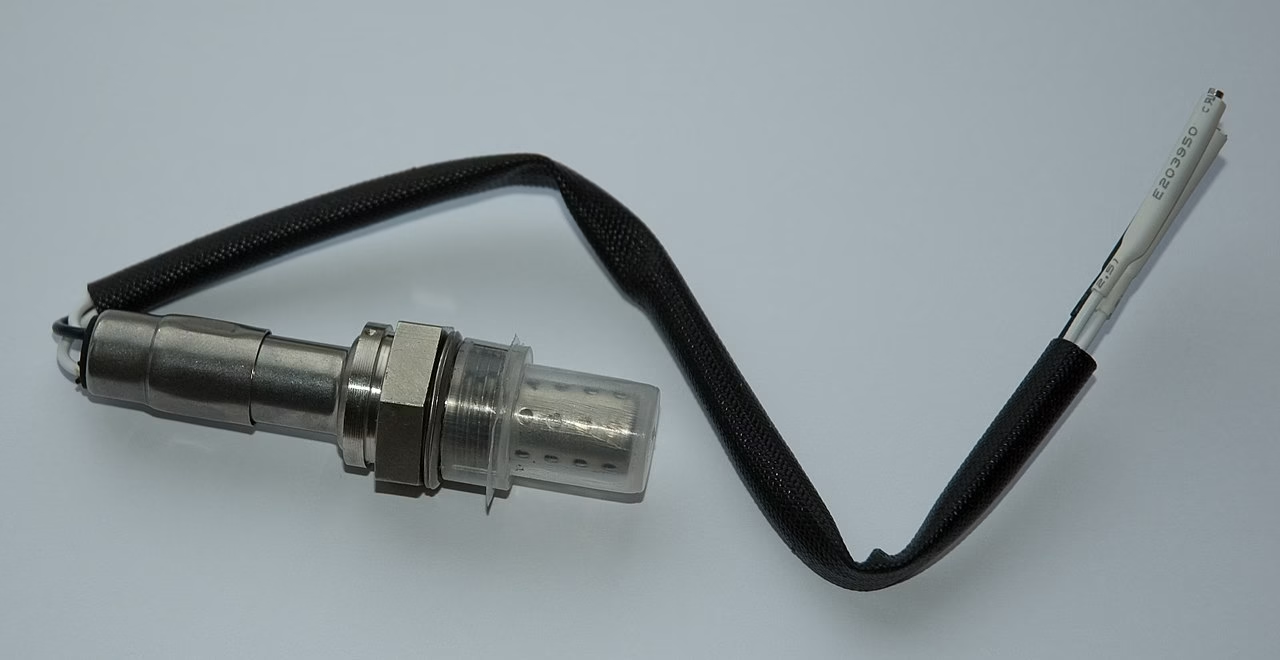
Oxygen Sensor Car Vehicle Engine Maintenance

An oxygen sensor is a vital component of a vehicle’s engine management system, essential for monitoring oxygen levels in exhaust gases to optimize fuel efficiency and reduce emissions. This comprehensive guide covers the operation, types, and importance of oxygen sensors, symptoms of faults, and the steps for diagnosis and replacement. Learn how to maintain these crucial sensors to ensure peak automotive performance and compliance with emission standards. Image source: Wikipedia / By Martin Olsson

Read More »Know Your Car Basics 101: Oxygen Sensors – Function and Faulty Implications

Religion 101: Part 3 – Exploring the Trimurti: Shiva the Destroyer

Trimurthi Shiva Religion Hindu

The iconic 65-foot-tall statue of Lord Shiva at the Shivoham Shiva Temple (formerly known as the Shiv Mandir or Kempfort Shiva Temple) in Bengaluru stands as one of the city’s most awe-inspiring landmarks. Located on Old Airport Road in Murugeshpalya, this magnificent idol, consecrated in 1995 on Maha Shivaratri, depicts Him in a serene meditative lotus pose against a backdrop resembling Mount Kailash, with the sacred River Ganges cascading from his matted locks, his damaru (drum) and trishul (trident) in hand, symbolizing cosmic creation, preservation, and destruction. Image source: Wikipedia

Read More »Religion 101: Part 3 – Exploring the Trimurti: Shiva the Destroyer

Military 101: The Evolution of Anti-Tank Weapons in World War II

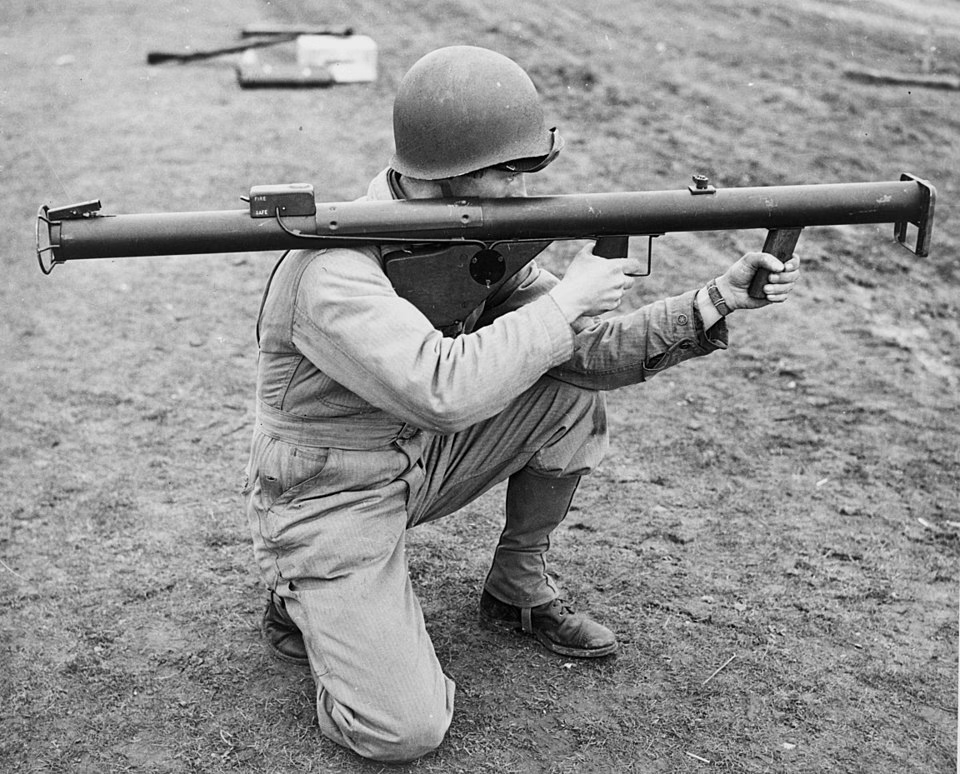
Anti-Tank Bazooka Military Weapon World War 2

The Bazooka, officially known as the M1 rocket launcher, was a groundbreaking American anti-tank weapon introduced in 1942 during World War II, revolutionizing infantry warfare by providing foot soldiers with a portable means to combat armored vehicles. This shoulder-fired, 2.36-inch diameter tube launched fin-stabilized, high-explosive shaped-charge rockets (like the M6) up to 200 yards effectively, penetrating up to 100mm of armor—enough to cripple German Panzers and Japanese tanks. Image source: U.S. Army Signal Corps/Wikimedia

Read More »Military 101: The Evolution of Anti-Tank Weapons in World War II