Skip to content

Economy

Economy 101: Top Economies in Africa – Strengths, and Weaknesses

G20 Economy African European Union

The G20 (Group of Twenty) is the world’s premier forum for international economic cooperation, bringing together 19 major economies (Argentina, Australia, Brazil, Canada, China, France, Germany, India, Indonesia, Italy, Japan, Mexico, Russia, Saudi Arabia, South Africa, South Korea, Turkey, United Kingdom, United States) plus the European Union and, since 2023, the African Union as a permanent member. Together they represent about 85% of global GDP, 75% of international trade, and two-thirds of the world’s population. Image source: Wikipedia / European Union

Read More »Economy 101: Top Economies in Africa – Strengths, and Weaknesses
Food 101: Chili – The Fiery Journey of A Culinary Delight

Chili Red Spices Food Indian Vegetables Cooking Health

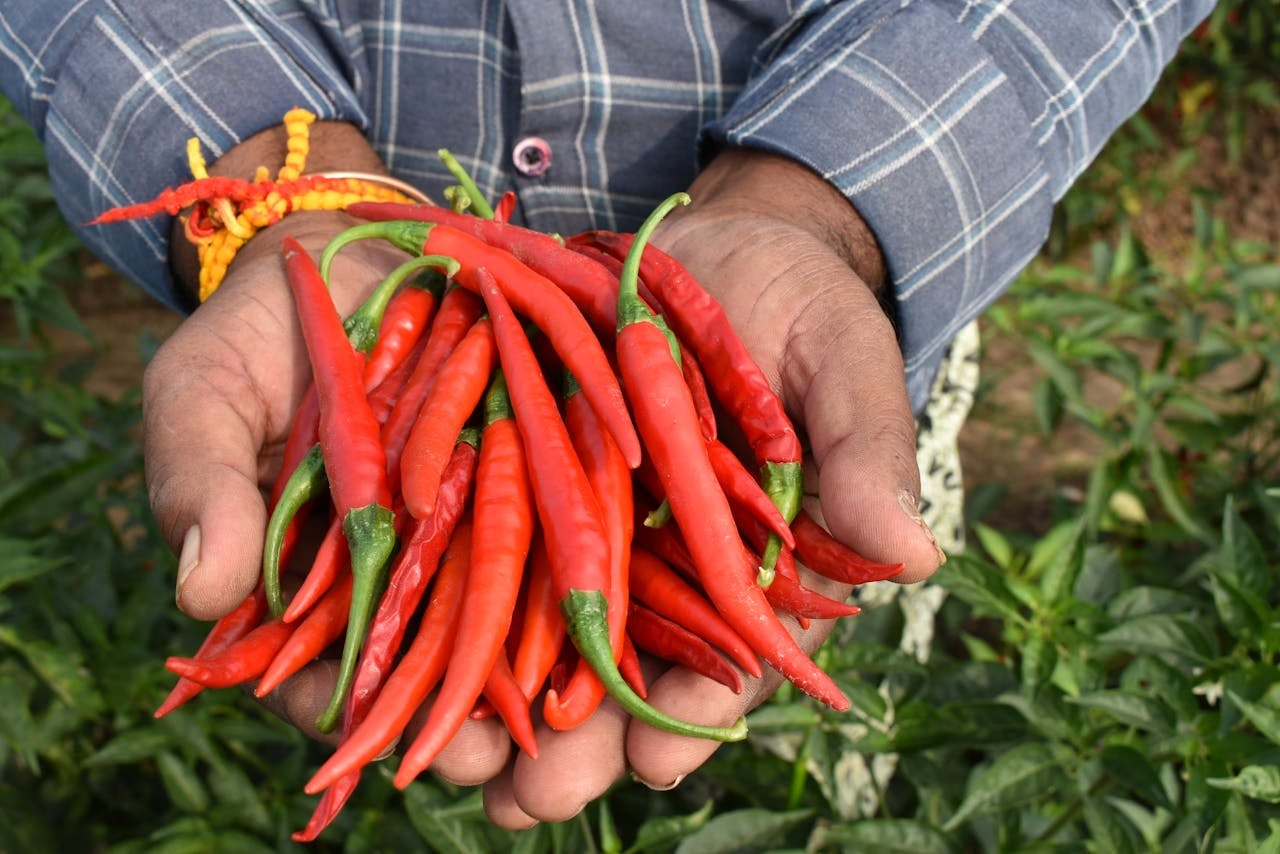
Chili peppers (also spelled chili or chile) are the fiery, pungent fruits of plants in the genus *Capsicum*, belonging to the nightshade family (Solanaceae). Native to the Americas—likely first domesticated in Mexico—they were spread worldwide after Christopher Columbus brought them to Europe in the late 15th century, quickly becoming essential in cuisines across Asia, Africa, the Caribbean, and beyond. Their signature heat comes from **capsaicin** and related compounds concentrated in the inner membranes, measured on the Scoville scale from mild bell peppers at 0 SHU to ultra-hot varieties like Pepper X exceeding 2.6 million SHU. Image source: Bharath N/Pexel

Read More »Food 101: Chili – The Fiery Journey of A Culinary Delight

Economy 101: The Powerful G20 – History, Members, and Objectives

G20 Economy African European Union

The G20 (Group of Twenty) is the world’s premier forum for international economic cooperation, bringing together 19 major economies (Argentina, Australia, Brazil, Canada, China, France, Germany, India, Indonesia, Italy, Japan, Mexico, Russia, Saudi Arabia, South Africa, South Korea, Turkey, United Kingdom, United States) plus the European Union and, since 2023, the African Union as a permanent member. Together they represent about 85% of global GDP, 75% of international trade, and two-thirds of the world’s population. Image source: Wikipedia / European Union

Read More »Economy 101: The Powerful G20 – History, Members, and Objectives

Economy 101: Rare Earth – Understanding the Robust Economy

Rare Earth Minerals Economy

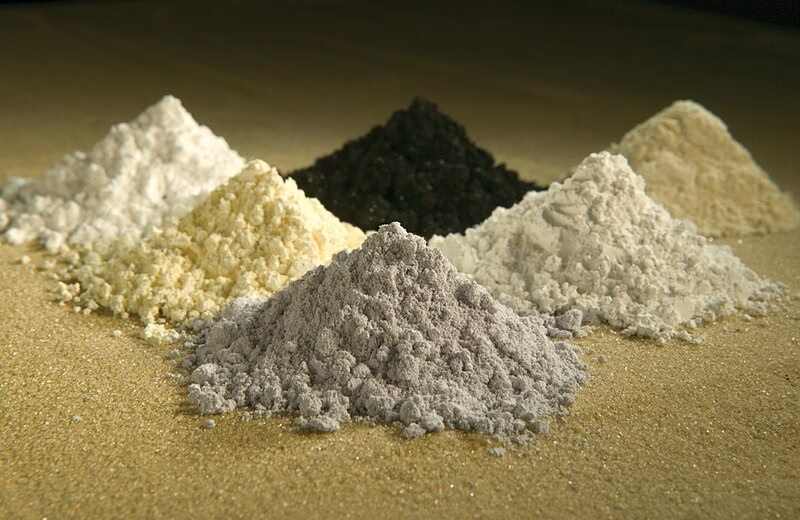
The following rare earth oxides, listed clockwise from the top center, are commonly used for tracking sediment movement and pinpointing erosion sources with high precision: praseodymium oxide (Pr₆O₁₁), cerium oxide (CeO₂), lanthanum oxide (La₂O₃), neodymium oxide (Nd₂O₃), samarium oxide (Sm₂O₃), and gadolinium oxide (Gd₂O₃). Each oxide is selected for its unique signature, enabling scientists to map sediment transport, assess erosion rates, and inform watershed management strategies to mitigate environmental degradation. Image source: Wikimedia/By Peggy Greb (US Department of Agriculture)

Read More »Economy 101: Rare Earth – Understanding the Robust Economy

Education 101: The Importance of Basic Mathematics Skills in Everyday Life

René Descartes Mathematics History French Education Skills Knowledge

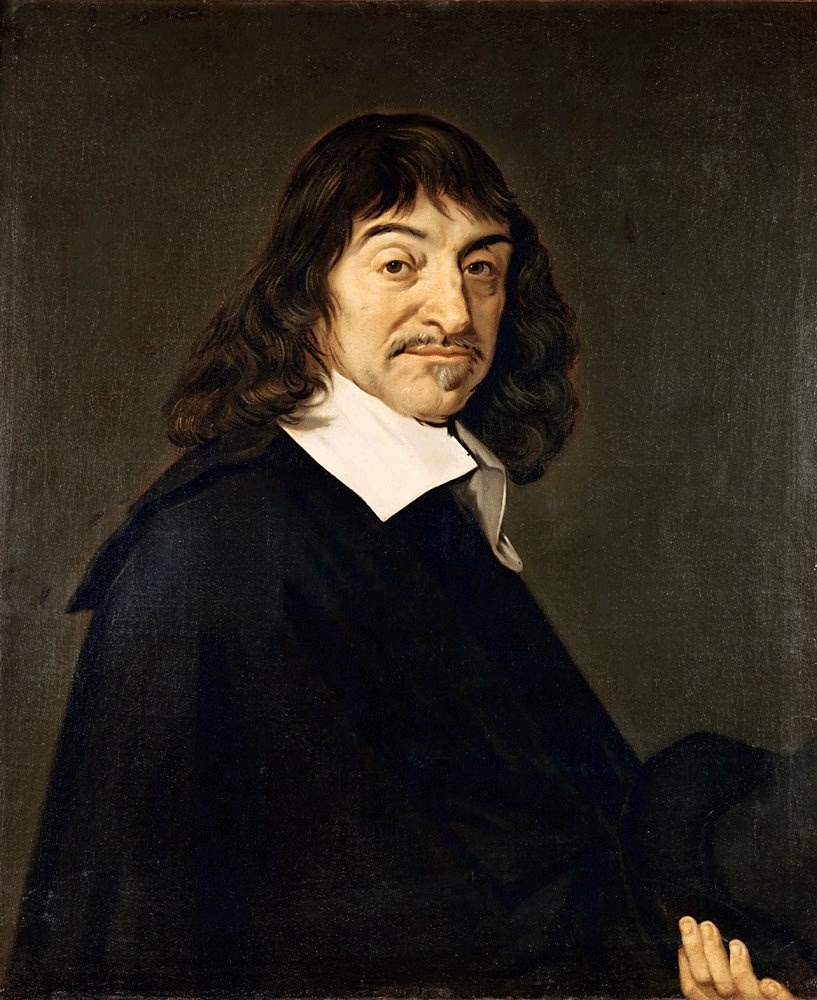
The title “father of modern mathematics” is often attributed to René Descartes (1596–1650), though the designation can vary depending on context, as several figures contributed significantly to shaping modern mathematics. Descartes introduced the Cartesian coordinate system, which links geometry and algebra by representing geometric shapes with algebraic equations. Image source: After Frans Hals – André Hatala [e.a.] (1997) De eeuw van Rembrandt, Bruxelles: Crédit communal de Belgique, ISBN 2-908388-32-4., Public Domain.Read More »Education 101: The Importance of Basic Mathematics Skills in Everyday Life

Economy 101: The Legend of Warren Buffett & Wealth Creation

Warren Buffett Economy Investment Money Wealth

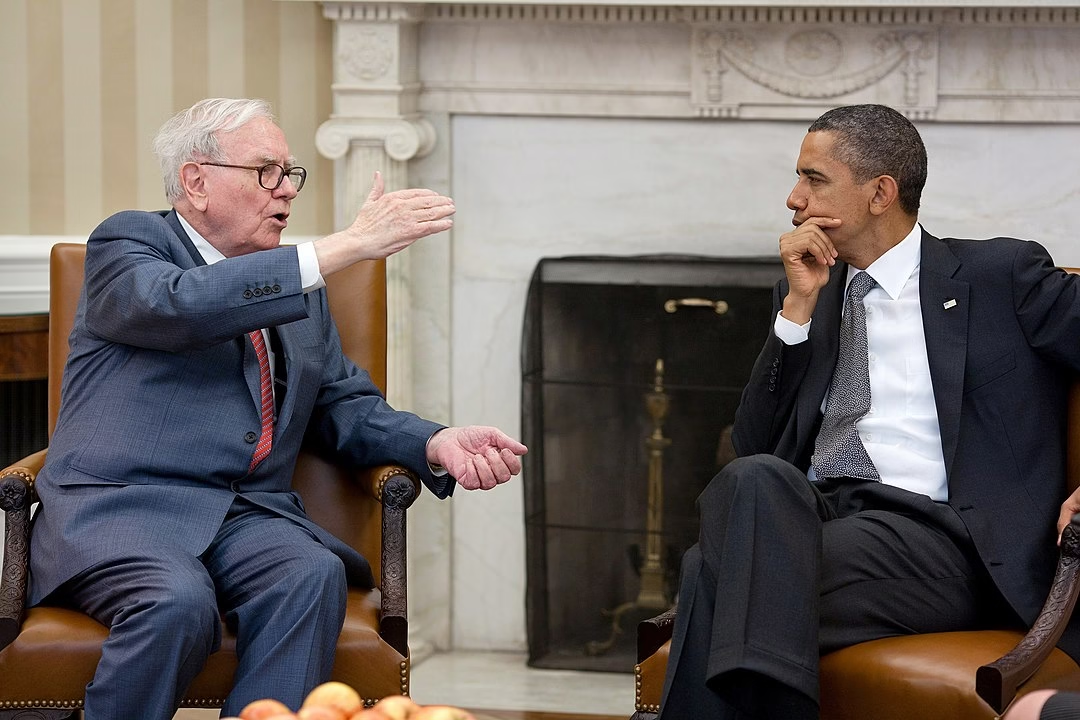
A photo of President Barack Obama meeting with Warren Buffett, the Chairman of Berkshire Hathaway, in the Oval Office, July 18, 2011. Warren Buffett, born August 30, 1930, in Omaha, Nebraska, is widely regarded as one of the greatest investors of all time and with a net worth of approximately $140 billion as of 2025, he has pledged to give away 99% of his wealth through the Giving Pledge, primarily to the Bill & Melinda Gates Foundation. His disciplined, patient approach—emphasizing economic moats, intrinsic value, and long-term ownership—has delivered outsized returns, outpacing the S&P 500 for decades. Image source: White House/Wikipedia

Read More »Economy 101: The Legend of Warren Buffett & Wealth Creation

Know Your Car Basics 101: Important Fuel Efficiency Secrets

Petrol Station Subsidy Malaysia Fuel Efficiency

Fuel efficiency refers to the ability of a vehicle or system to maximize the distance traveled or work performed per unit of fuel consumed, typically measured in miles per gallon (MPG) or liters per 100 kilometers (L/100 km). It is influenced by factors such as engine design, vehicle weight, aerodynamics, driving habits, and road conditions. Efficient fuel use reduces costs, lowers greenhouse gas emissions, and conserves natural resources, making it a critical focus for sustainable transportation. Photo by Sergio Souza from Pexels

Read More »Know Your Car Basics 101: Important Fuel Efficiency Secrets

History 101: The Incredible Silk Road: Bridging East and West

Silk Road History China Europe Map

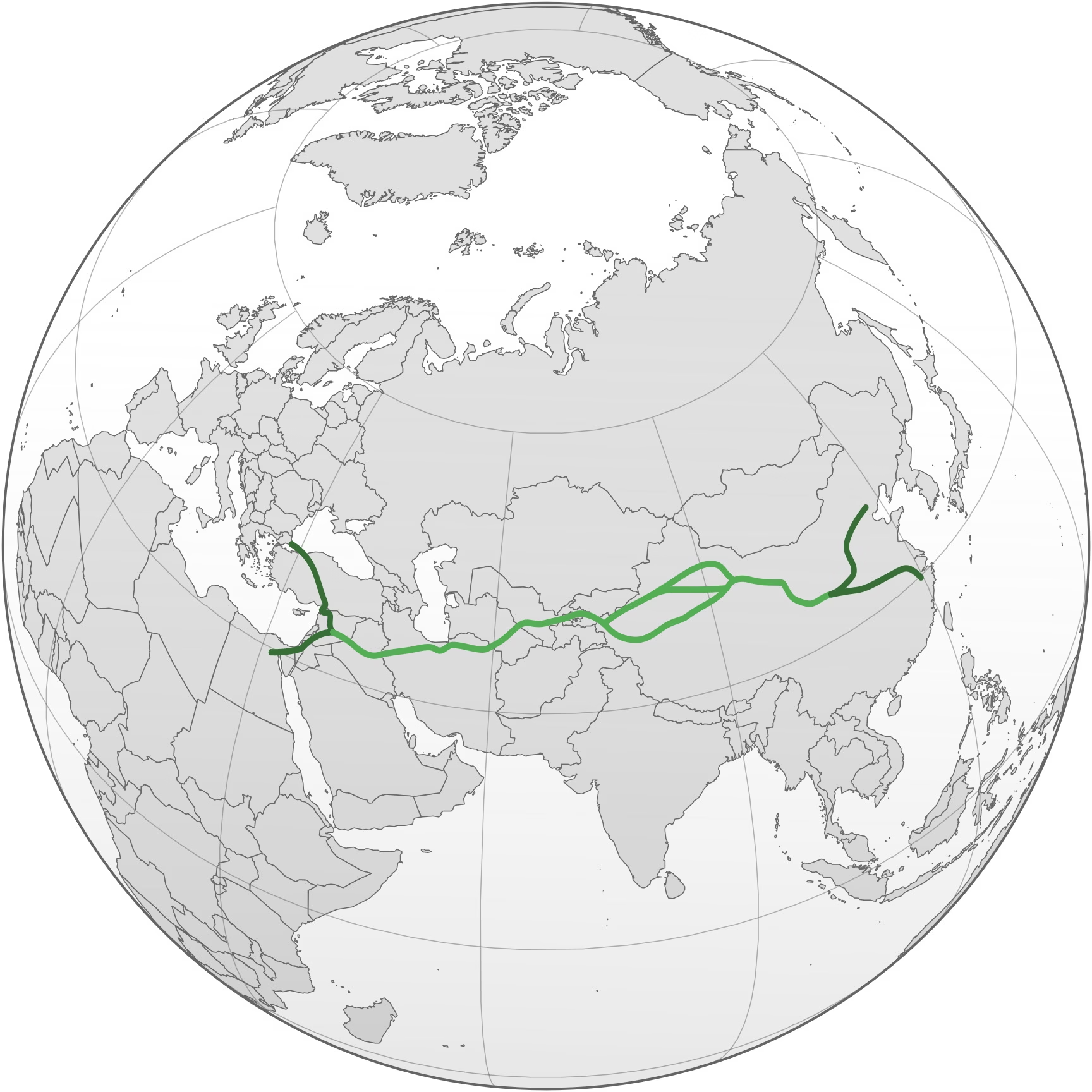
The Silk Road wasn’t a single, precisely measured road with a definitive length, but rather a network of interconnected trade routes across Asia, connecting the East and West. Its length varied depending on the specific routes taken, but it’s generally estimated to be around 4,000 miles (over 6,400 kilometers). Some estimates even suggest it could have been as long as 7,000 miles (over 11,000 kilometers) if all the branches and connecting paths are considered. Image source: Kelvin / Wikipedia

Read More »History 101: The Incredible Silk Road: Bridging East and West

Economy 101: Top 9 Personal Finance Mistakes You’re Making Now

Personal  Finance Money Economy Budget

In a nutshell, personal finance empowers you to take control of your financial life. It involves understanding your current financial situation, setting clear objectives, and implementing strategies for effectively managing your income, minimizing debt, growing your wealth through saving and investing, and protecting your assets against unforeseen circumstances. Ultimately, it’s about achieving financial freedom and peace of mind. Photo By: Kaboompics.com/Pexel

Read More »Economy 101: Top 9 Personal Finance Mistakes You’re Making Now

Finance 101: Understanding Malaysia’s Employees Provident Fund (EPF): History, Withdrawal Options, and Key Differences

Employees Provident Fund EPF KWSP Economy Money

The mid-20th century, particularly the period following World War II, witnessed a significant surge in the establishment of comprehensive Employees Provident Fund (EPF) systems across the globe. Several key factors drove this. The devastation of the war underscored the need for stronger social safety nets, including provisions for retirement income. Governments, eager to rebuild their economies and foster social stability, recognized the importance of providing workers with financial security. Image source: NSTRead More »Finance 101: Understanding Malaysia’s Employees Provident Fund (EPF): History, Withdrawal Options, and Key Differences