Skip to content

Childhood Memories: Part 12 – History of My Beloved Grandma

childhood grandma

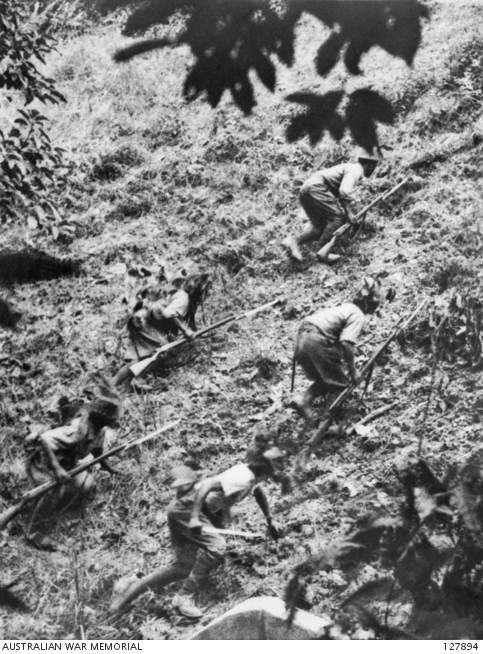
(Thankfully most of us did not spend our childhood times during the tough times during World War 2 – Image source: http://upload.wikimedia.org)

My grandmother – from my mother’s side is about 75 now (75 or 70, she can’t recall for she is not sure which year she was born).

She was born in Malaysia (Malaya back then), lived in Taiping where her father (my great grandfather) had a grocery shop (which meant they had rice for meals). She had a sister and 2 brothers and thanks to her father’s resourcefulness, the whole family survived through the Japanese occupation during the War World 2 (not making any trouble with the Japanese helped too).

Read More »Childhood Memories: Part 12 – History of My Beloved Grandma

History 101: How To Unite Malays (Part 2)

Austronesian history race malay

(Austronesians were the first humans in history to invent ocean-going sailing technologies, which allowed them to colonize a large part of the Indo-Pacific region. Image source: Reddit)

While it is true that a large number of Austronesians are of the Muslim faith (but not in the greater Polynesia), it is also important to note, that (in South East Asia) the majority of them converted en masse during the late 19th Century just prior to the Krakatau Volcanic explosion.

Read More »History 101: How To Unite Malays (Part 2)

History 101: How To Unite Malays (Part 1)

History Malay Race

(Johann Friedrich Blumenbach (11 May 1752 – 22 January 1840) was a German physician, naturalist, physiologist, and anthropologist. He was one of the first to explore the study of the human being as an aspect of natural history. His teachings in comparative anatomy were applied to his classification of human races, of which he claimed there were five, Caucasian, Mongolian, Malayan, Ethiopian, and American. Text and Image source: Wikipedia)

Read More »History 101: How To Unite Malays (Part 1)

Culture 101: The Fine Art of Namaste

hand namaste indian greetings vanakam

Namaste is a traditional South Asian greeting of respect and a common cultural practice in India. It involves a slight bow with hands pressed together, palms touching, and fingers pointing upwards, known as the Añjali Mudrā. The term originates from Sanskrit, combining ‘namas’ meaning ‘bow’ or ‘obeisance’ and ‘te’ meaning ‘to you’, thus translating to ‘I bow to you’. This gesture is an acknowledgment of the soul in one by the soul in another, embodying the belief that the divine resides within every individual. Image source: Wikipedia

Read More »Culture 101: The Fine Art of Namaste

Enforcement 101: The Evolution of Strategic Police Roadblocks

Roadblock Road Block

The primary objective of a police roadblock is to ensure public safety by monitoring and regulating vehicular traffic. These checkpoints are strategically placed to prevent and detect criminal activities, such as smuggling or driving under the influence. They also serve as a deterrent against traffic violations, contributing to safer roads. Additionally, roadblocks can facilitate emergency response during incidents, ensuring swift action and aid when necessary. Image source: Photo by Travis Saylor/Pexel

Read More »Enforcement 101: The Evolution of Strategic Police Roadblocks