Skip to content

Religion 101

Anything to do with religion, morality, belief and God

Religion 101: Part 3 – Exploring the Trimurti: Shiva the Destroyer

Trimurthi Shiva Religion Hindu

The iconic 65-foot-tall statue of Lord Shiva at the Shivoham Shiva Temple (formerly known as the Shiv Mandir or Kempfort Shiva Temple) in Bengaluru stands as one of the city’s most awe-inspiring landmarks. Located on Old Airport Road in Murugeshpalya, this magnificent idol, consecrated in 1995 on Maha Shivaratri, depicts Him in a serene meditative lotus pose against a backdrop resembling Mount Kailash, with the sacred River Ganges cascading from his matted locks, his damaru (drum) and trishul (trident) in hand, symbolizing cosmic creation, preservation, and destruction. Image source: Wikipedia

Read More »Religion 101: Part 3 – Exploring the Trimurti: Shiva the Destroyer

Religion 101: Part 2 – Exploring the Trimurti: Vishnu the Powerful Preserver

Vishnu Krishnan Indian Hindu God Religion Trimurti Belief

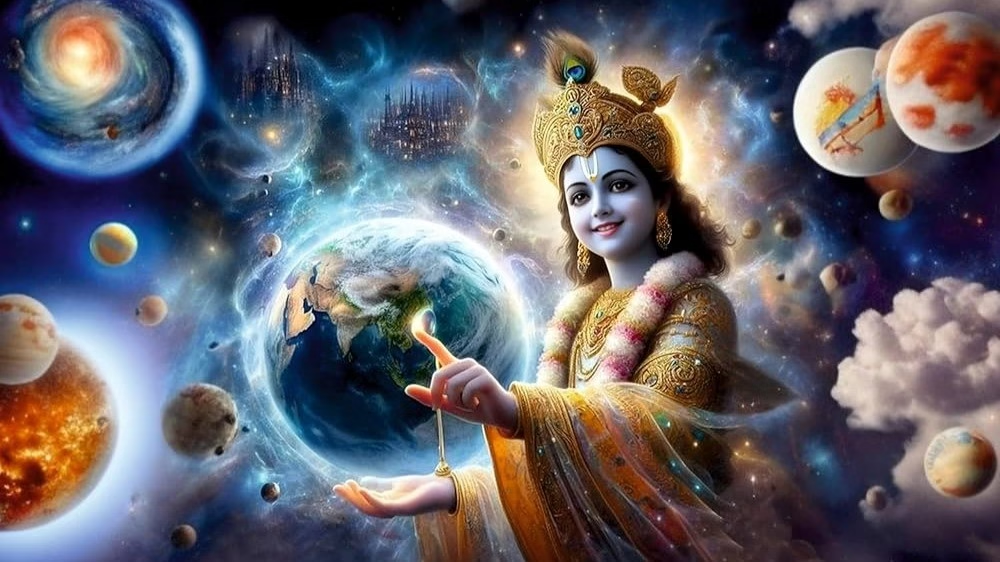
Lord Vishnu, one of the principal deities in Hinduism, is revered as the preserver and protector of the universe within the Trimurti, alongside Brahma (the creator) and Shiva (the destroyer). Known for his benevolence, compassion, and role in maintaining cosmic order (dharma), He is often depicted with blue skin, holding a conch, discus, lotus, and mace, symbolizing his divine powers. He resides in Vaikuntha, the celestial abode, with his consort, Lakshmi, the goddess of wealth. Vishnu is renowned for his ten avatars (Dashavatara), including Rama, Krishna, and Buddha, through which he incarnates on Earth to restore balance and righteousness whenever evil prevails. Image source: Facebook

Read More »Religion 101: Part 2 – Exploring the Trimurti: Vishnu the Powerful Preserver

Religion 101: Part 1 – Exploring the Powerful Trimurti: Brahma the Creator

Brahma Hindu God Religion

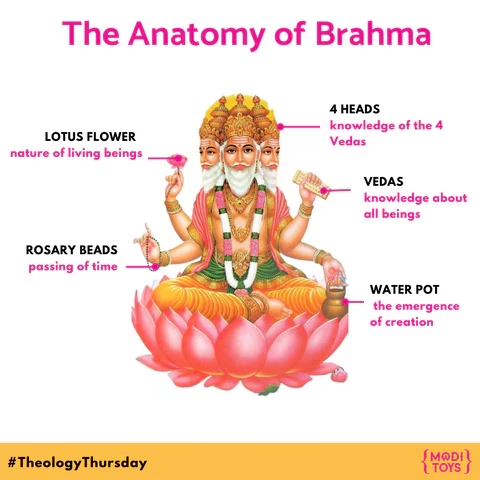
The Vedas—Rigveda, Samaveda, Yajurveda, and Atharvaveda—are the foundational scriptures of Hinduism, composed around 1500–1200 BCE. Believed to be divinely revealed (shruti, or “heard”), they were transmitted orally by Brahma to the sages (rishis) for humanity’s guidance. The Vedas contain hymns, rituals, philosophical teachings, and spiritual knowledge, covering cosmology, rituals, and the pursuit of dharma (cosmic order). Image source: Modi Toys

Read More »Religion 101: Part 1 – Exploring the Powerful Trimurti: Brahma the Creator

Religion 101: The Ancient Kumbh Mela – A Deep Dive Into The Celebrations

Kumbh Mela Hinduism Religion India History Event

The Maha Kumbh Mela 2025, held in Prayagraj from January 13th to February 26th, 2025, witnessed an extraordinary gathering of faith, with over 400 million devotees expected and reports suggesting the actual attendance surpassed this figure, possibly reaching over 660 million by the conclusion. The logistics involved in managing such a massive congregation are staggering, requiring meticulous planning and execution across various sectors. Image source: Kumbh Camp India

Read More »Religion 101: The Ancient Kumbh Mela – A Deep Dive Into The Celebrations

Malaysia 101: The Majestic Batu Caves: History, Celebrations and the Giant Lord Murugan Statue

Batu Caves Thaipusam Old Photo Religion Hindu Malaysia India

In the 1950s, Batu Caves was already a significant site for the Tamil Hindu community in Malaysia, with the annual Thaipusam festival being celebrated since the late 19th century. The caves, with their stunning natural limestone formations, had been a place of worship and pilgrimage for decades. During this time, the area surrounding Batu Caves began to develop, although it was not as built up as it is today. The iconic Murugan statue that now stands at the entrance had not yet been constructed; it would become a later addition that further solidified the caves’ status as a religious landmark. Image source: Astro Ulagam

Read More »Malaysia 101: The Majestic Batu Caves: History, Celebrations and the Giant Lord Murugan Statue

Religion 101: Mahabharata Part 4 – Modern Findings & Evidences

Mahabharata Bhagavad Gita Kurukshetra War

The Bhagavad Gita, often referred to as the Gita is a central text of Hindu philosophy and a part of the Indian epic Mahabharata. It is presented as a dialogue between the prince Arjuna and the god Krishna, who serves as his charioteer. This dialogue occurs on the battlefield just before the start of a great war, where Arjuna is in a moral crisis about the violence and death the war will cause. The Gita addresses the concepts of duty and righteousness, and it has been revered for its teachings on how to live a just life, pursue spiritual enlightenment, and understand the nature of the universe. Image source: Kobo

Read More »Religion 101: Mahabharata Part 4 – Modern Findings & Evidences