Skip to content

History

Food 101: Chili – The Fiery Journey of A Culinary Delight

Chili Red Spices Food Indian Vegetables Cooking Health

Chili peppers (also spelled chili or chile) are the fiery, pungent fruits of plants in the genus *Capsicum*, belonging to the nightshade family (Solanaceae). Native to the Americas—likely first domesticated in Mexico—they were spread worldwide after Christopher Columbus brought them to Europe in the late 15th century, quickly becoming essential in cuisines across Asia, Africa, the Caribbean, and beyond. Their signature heat comes from **capsaicin** and related compounds concentrated in the inner membranes, measured on the Scoville scale from mild bell peppers at 0 SHU to ultra-hot varieties like Pepper X exceeding 2.6 million SHU. Image source: Bharath N/Pexel

Read More »Food 101: Chili – The Fiery Journey of A Culinary Delight

History 101: Renaissance: A Rebirth of Art and Learning

Leonardo da Vinci Art Renaissance History Italy Europe

The fascinating era of the Renaissance, a transformative period in European history, spanned from the 14th to the 17th century. Discover the revival of classical antiquity, the emergence of humanism, and the groundbreaking advancements in art, science, and literature with influential figures such as Leonardo da Vinci, Michelangelo, Galileo, and Copernicus, whose works laid the foundation for modern Western civilization. Delve into the innovations that shaped this pivotal chapter in history and understand its lasting legacy on contemporary culture and thought.  Image source: Eric Kim Photography

Read More »History 101: Renaissance: A Rebirth of Art and Learning

Military 101: The Evolution of Anti-Tank Weapons in World War II

Anti-Tank Bazooka Military Weapon World War 2

The Bazooka, officially known as the M1 rocket launcher, was a groundbreaking American anti-tank weapon introduced in 1942 during World War II, revolutionizing infantry warfare by providing foot soldiers with a portable means to combat armored vehicles. This shoulder-fired, 2.36-inch diameter tube launched fin-stabilized, high-explosive shaped-charge rockets (like the M6) up to 200 yards effectively, penetrating up to 100mm of armor—enough to cripple German Panzers and Japanese tanks. Image source: U.S. Army Signal Corps/Wikimedia

Read More »Military 101: The Evolution of Anti-Tank Weapons in World War II

Technology 101: Floppy Disk Revolution: Why 1.44 MB Changed Everything

Floppy Disk Computing Storage

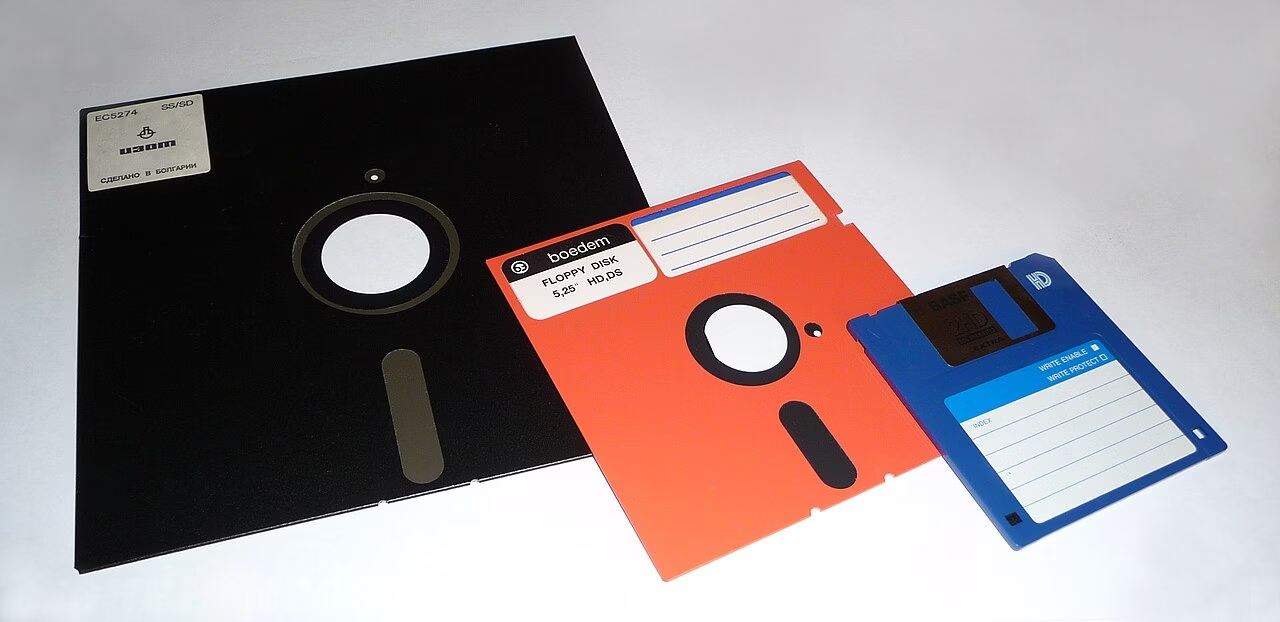
The floppy disk was a portable magnetic storage medium introduced by IBM in 1971. Initially, an 8-inch flexible disk encased in a cardboard jacket holding about 80 KB of data, it evolved into the rigid 5.25-inch version (up to 1.2 MB) in the late 1970s and the ubiquitous 3.5-inch hard-shell format (1.44 MB standard) by the mid-1980s, popularized by Apple’s Macintosh and Sony’s design. Data was written and read via a spinning disk coated with magnetic material, accessed through a sliding metal shutter, making it ideal for transferring files, distributing software, and booting systems. Image source: Wikimedia/George Chernilevsky

Read More »Technology 101: Floppy Disk Revolution: Why 1.44 MB Changed Everything

History 101: The Legacy of Legendary Chhatrapati Shivaji Maharaj

Chhatrapati Shivaji Maharaj India History

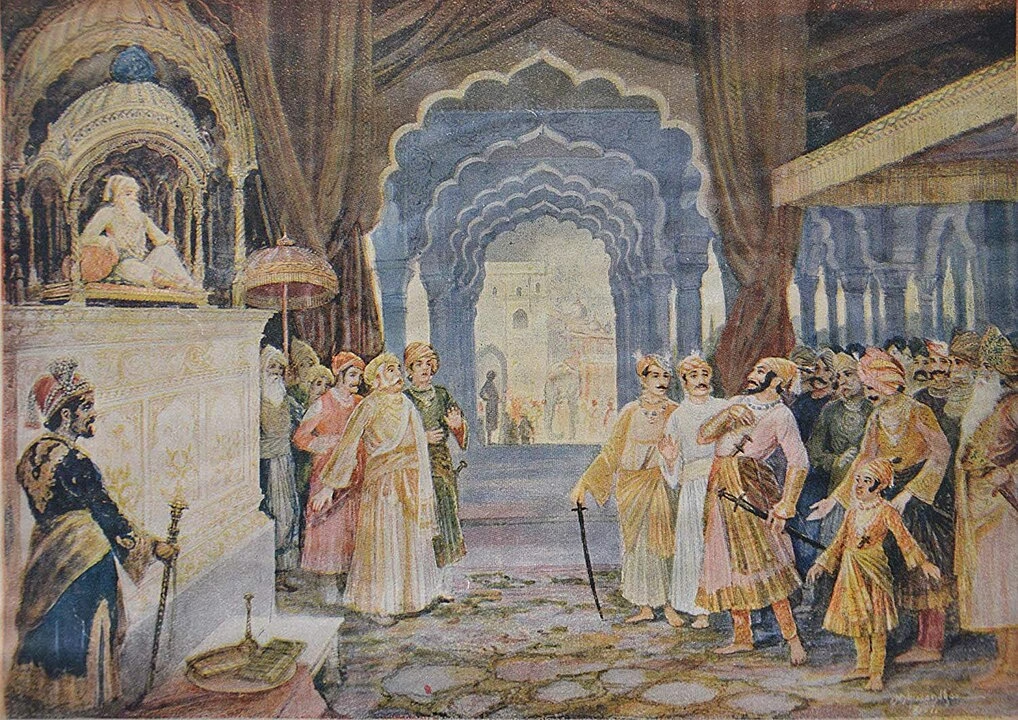
The painting portrays the dramatic meeting in 1666 when Chhatrapati Shivaji Maharaj, the founder of the Maratha Empire, was summoned to Aurangzeb’s court in Agra. According to historical accounts, this encounter was marked by tension, as Shivaji, a regional power, faced the mighty Mughal emperor at the height of his authority. Dhurandhar’s work captures this clash of personalities and ideologies, emphasizing Shivaji’s defiance and dignity in the face of Aurangzeb’s imposing presence. Image source: M. V. Dhurandhar/Wikipedia

Read More »History 101: The Legacy of Legendary Chhatrapati Shivaji Maharaj

History 101: The Indus Valley Civilization: Ancient And Mysterious

Indus Valley Civilization Hindu India History

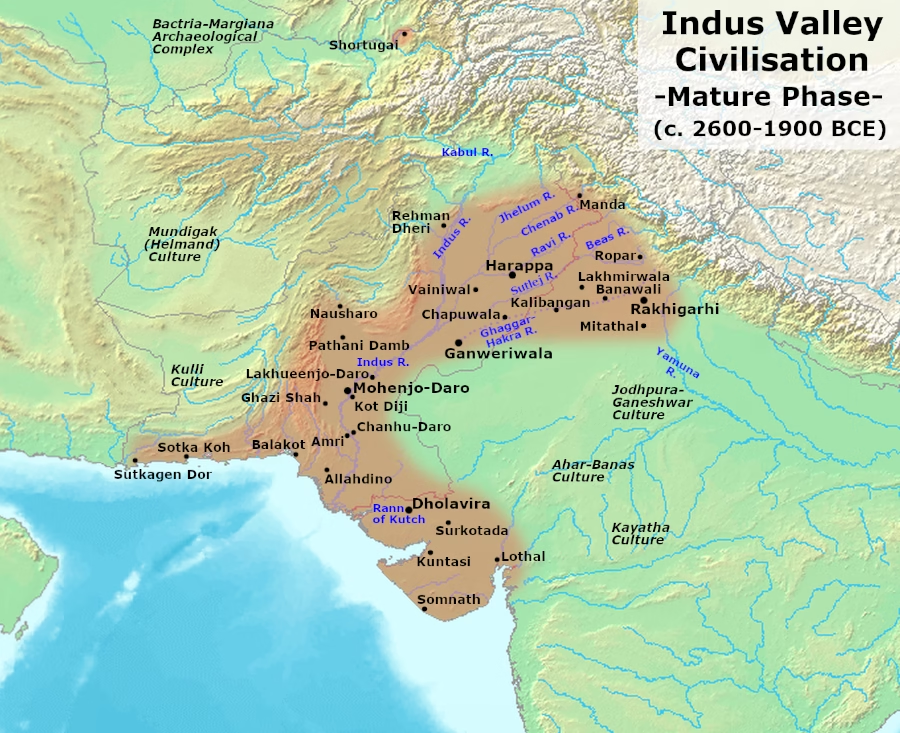
The Indus Valley Civilization (c. 3300–1300 BCE) was a Bronze Age civilization in northwest South Asia, centered along the Indus River in modern-day Pakistan and northwest India. One of the world’s earliest urban societies, alongside Mesopotamia and Egypt, it was known for major cities such as Harappa, Mohenjo-Daro, and Dholavira, among others, characterized by advanced urban planning, grid layouts, standardized brick construction, and sophisticated drainage systems. Image source: Avantiputra7 – Own work, CC BY-SA 3.0

Read More »History 101: The Indus Valley Civilization: Ancient And Mysterious

History 101: The Incredible Silk Road: Bridging East and West

Silk Road History China Europe Map

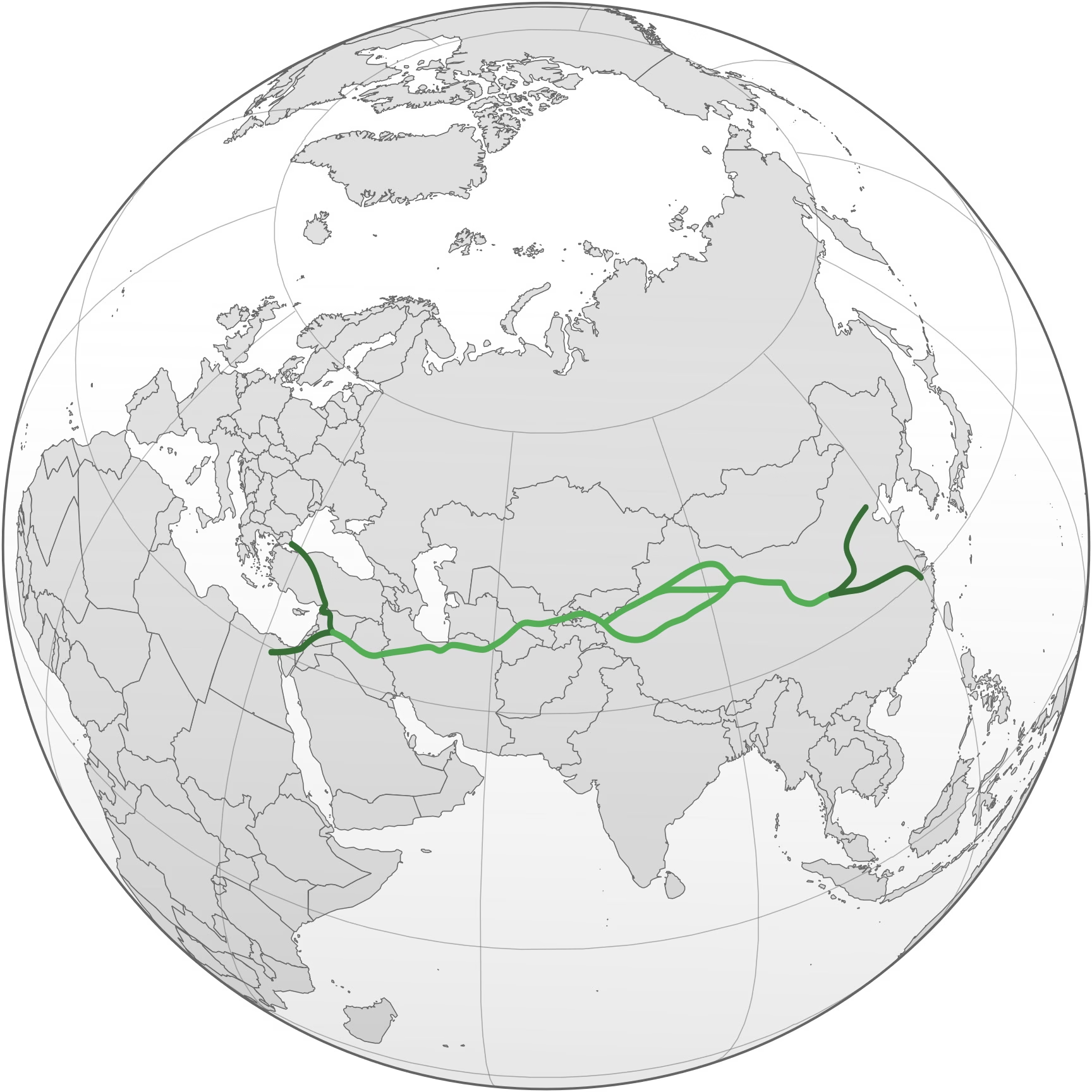
The Silk Road wasn’t a single, precisely measured road with a definitive length, but rather a network of interconnected trade routes across Asia, connecting the East and West. Its length varied depending on the specific routes taken, but it’s generally estimated to be around 4,000 miles (over 6,400 kilometers). Some estimates even suggest it could have been as long as 7,000 miles (over 11,000 kilometers) if all the branches and connecting paths are considered. Image source: Kelvin / Wikipedia

Read More »History 101: The Incredible Silk Road: Bridging East and West

Tamil Movie Review: Amaran 2024: Based On True Amazing Story

Amaran Tamil Movie Military Army Indian

Amaran” is a 2024 Tamil biographical action war film directed by Rajkumar Periasamy, based on the book series “India’s Most Fearless.” Produced by Raaj Kamal Films International and Sony Pictures Films India, it stars Sivakarthikeyan as Major Mukund Varadarajan, alongside Sai Pallavi. The film’s production involved extensive location shooting in Kashmir, Chennai, and Pondicherry, spanning roughly a year. With music by G.V. Prakash Kumar, “Amaran” was released on October 31, 2024, coinciding with Diwali, and has garnered praise for its performances and production values. Image source: IMDB

Read More »Tamil Movie Review: Amaran 2024: Based On True Amazing Story

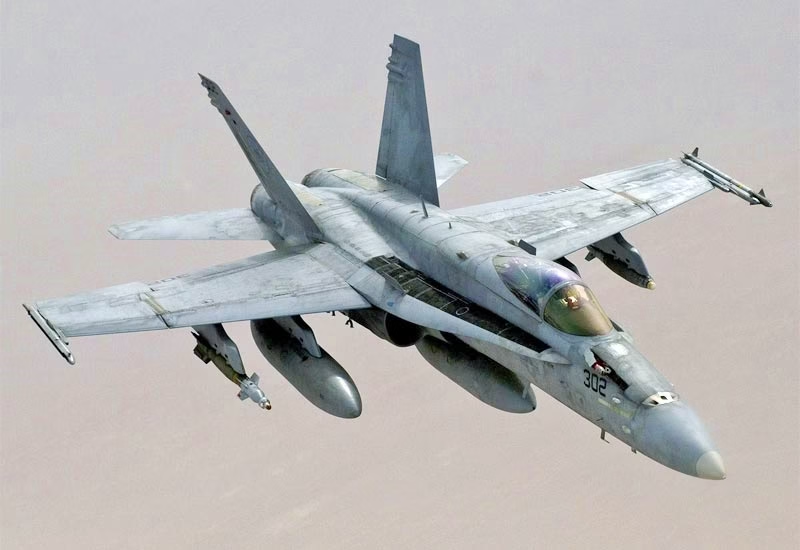
Military 101: The F/A-18 Hornet: Agile, Lethal And Multi-Role

F/A-18 Hornet Fighter Jet RMAF Aircraft

The F/A-18 Hornet’s design lineage traces back to the Northrop YF-17, a prototype developed for the U.S. Air Force’s Lightweight Fighter (LWF) program. While the YF-17 itself didn’t win the Air Force competition, its design proved highly adaptable to the U.S. Navy’s requirements for a multirole fighter. The Navy’s need for a carrier-based aircraft led to significant modifications, including a strengthened airframe, folding wings, and enhanced avionics, culminating in the F/A-18 Hornet. Image source: By US Air Force – dvidshub.net, Public Domain

Read More »Military 101: The F/A-18 Hornet: Agile, Lethal And Multi-Role